

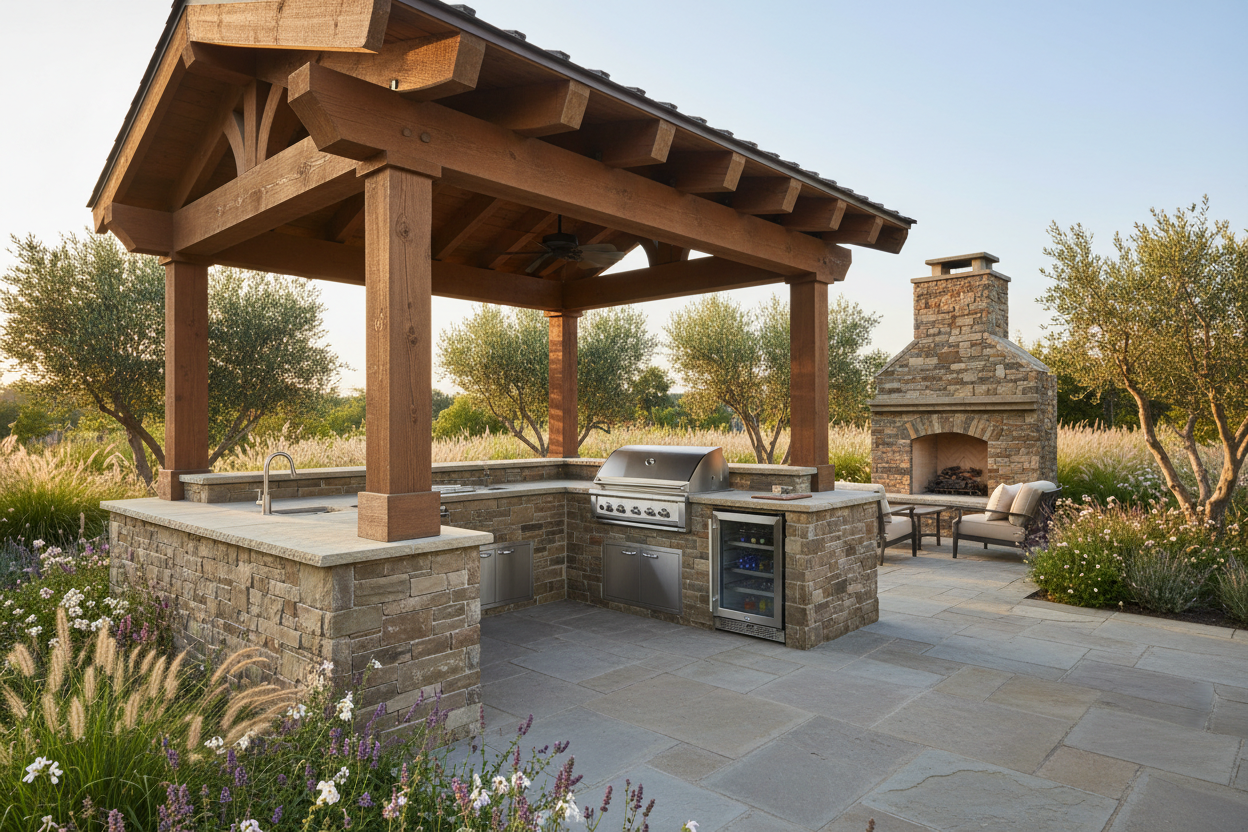
How to Design the Ultimate Outdoor Kitchen
There's a moment when a backyard stops being just a backyard. It's when the grill gets a permanent home, the countertops go in, and suddenly you're not just cooking outside — you're living outside. Designing the ultimate outdoor kitchen is one of the most rewarding investments you can make in your home, and with the right plan, it can be a seamless extension of your indoor living space.
Here's how to do it right.
1. Start With How You Actually Entertain
Before you pick a single appliance, think about how you use your outdoor space. Do you host large gatherings or intimate dinners? Do you cook elaborate meals or keep it simple? Are you a grill purist or a multi-station chef?
Your answers shape everything — from the size of your cooking surface to whether you need a full outdoor refrigerator, a kegerator, or a dedicated pizza oven station.
2. Choose Your Layout
Outdoor kitchens typically follow one of four layouts:
- Straight/Linear — ideal for smaller spaces or against a wall; clean and efficient
- L-Shape — great for corner spaces; separates prep from cooking zones
- U-Shape — maximum counter space and storage; perfect for serious entertainers
- Island with Seating — the social centerpiece; bar stools on one side, cooking on the other
The best layout balances your available space with your entertaining style. Don't forget to account for traffic flow — guests should be able to move freely without crowding the cook.
3. Pick Your Primary Cooking Station
The grill is the heart of any outdoor kitchen. The right choice depends on your fuel preference and cooking style:
- Gas grills — convenient, consistent heat, easy temperature control. Brands like Wildfire Outdoor Living offer premium built-in options purpose-built for outdoor kitchen installations.
- Charcoal/wood — unmatched flavor, more hands-on cooking experience
- Hybrid — the best of both worlds for the serious outdoor chef
For a true outdoor kitchen, a built-in grill is almost always the right call over a freestanding unit — it integrates cleanly into your cabinetry and gives a finished, custom look.
4. Build Out Your Appliance Suite
Once your primary cooking station is set, layer in the appliances that match your lifestyle:
Must-Haves:
- Side burner — for sauces, sides, and boiling
- Outdoor refrigerator — keeps ingredients and drinks cold without trips inside
- Prep sink — a game-changer for outdoor cooking; eliminates constant trips indoors
Nice-to-Haves:
- Kegerator or beverage cooler — perfect for entertaining
- Pizza oven — a showstopper for guests
- Warming drawer — keeps food at temp while you finish cooking
- Ice maker — because running out of ice is never acceptable at a luxury outdoor kitchen
5. Select Your Materials Wisely
Outdoor kitchens live in the elements — sun, rain, humidity, and temperature swings. Material choices matter enormously:
- Countertops: Porcelain, granite, and concrete are top choices. Avoid materials that absorb moisture or fade in UV.
- Cabinetry: Marine-grade polymer or stainless steel are the gold standard for outdoor use. Wood requires significant maintenance.
- Flooring: Non-slip porcelain tile, natural stone, or composite decking all work well. Avoid anything that gets slippery when wet.
6. Don't Forget Shade, Lighting & Comfort
The best outdoor kitchens are usable morning to night, season to season:
- Shade structure — pergola, retractable awning, or a full outdoor roof keeps the space comfortable and protects your appliances
- Outdoor lighting — task lighting over the grill, ambient lighting for atmosphere, and pathway lighting for safety
- Heating — a fire pit, fire bowl, or patio heater extends your outdoor season well into fall and winter
7. Add a Fire Feature
No outdoor kitchen is truly complete without a fire feature. Whether it's a built-in fire pit table at the seating area, a dramatic fire bowl as a focal point, or a linear fire feature along a wall — fire transforms an outdoor kitchen into an outdoor destination.
Brands like The Outdoor Plus and HPC Fire offer stunning options that complement any outdoor kitchen design.
8. Work With What You Have — Then Grow
You don't have to build your dream outdoor kitchen all at once. Many homeowners start with a core cooking station and expand over time — adding refrigeration, a sink, seating, and fire features as budget allows. The key is planning the infrastructure (gas lines, electrical, plumbing) upfront so future additions are seamless.
Ready to Design Yours?
At The Manor and Terrace, we specialize in helping homeowners create outdoor living spaces that are as functional as they are beautiful. Browse our curated selection of outdoor kitchen appliances, fire features, and premium grills — or request a quote and let's design something extraordinary together.

Written by William Pickle


Leave a comment
This site is protected by hCaptcha and the hCaptcha Privacy Policy and Terms of Service apply.