
Fire Bowls vs. Fire Tables vs. Fire Pits: What's the Difference?
If you're drawn to the idea of a fire feature in your outdoor space — the warmth, the ambiance, the way it naturally draws people together — you've probably noticed there's no shortage of options. Fire bowls, fire tables, fire pits. They all involve flame, but they serve different purposes, suit different spaces, and create very different experiences.
Here's how to think about each one.
Fire Pits: The Classic Gathering Point
A fire pit is the most traditional of the three — a contained, open flame set low to the ground, designed purely around the experience of gathering. Whether round, square, or rectangular, fire pits are built for atmosphere first.
Best for:
- Large outdoor spaces where seating can be arranged in a full circle
- Homeowners who want a bold, statement focal point
- Wood-burning or gas options depending on preference and local codes
What to know:
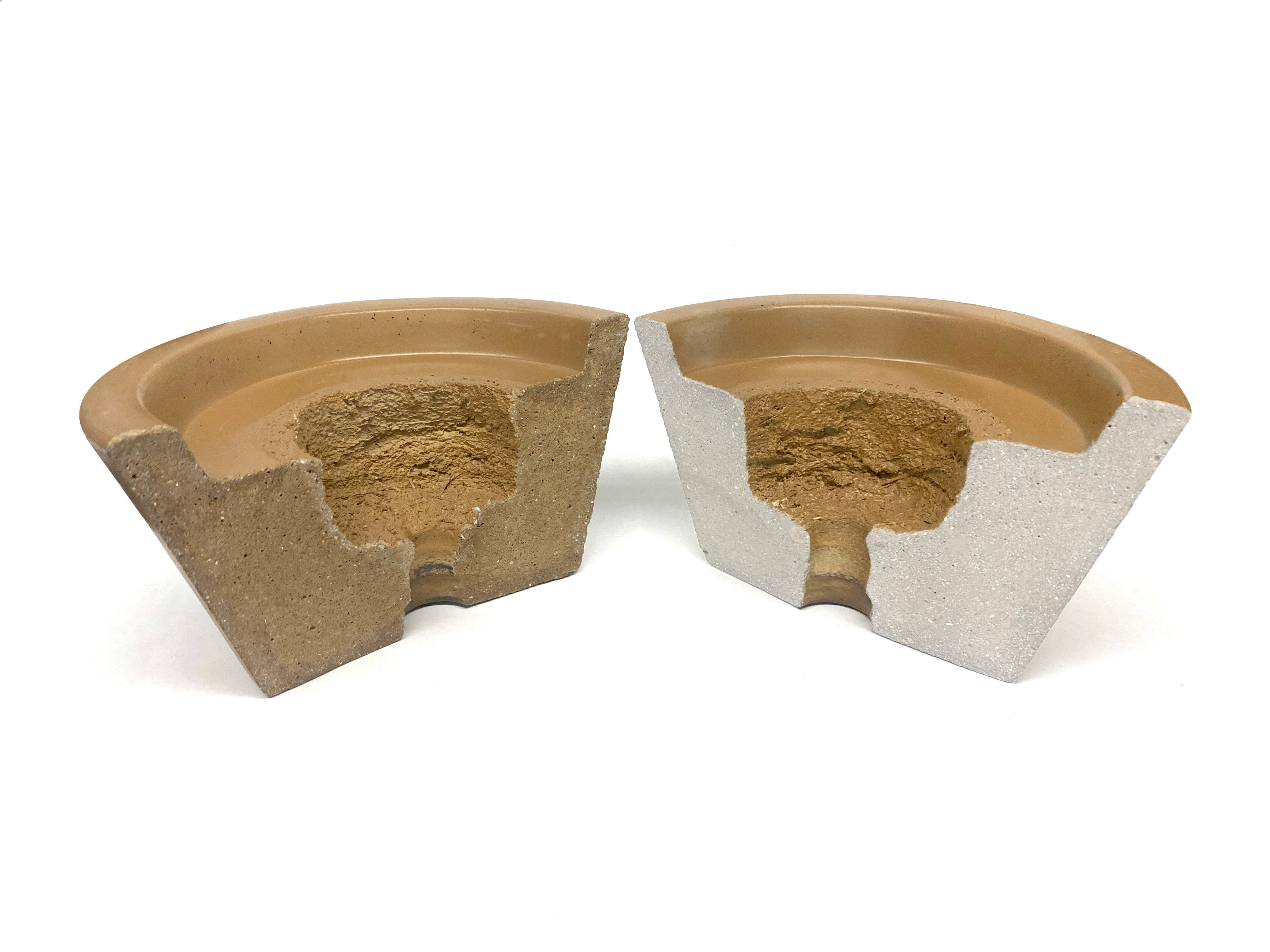
Fire pits come in a wide range of sizes — from intimate 24" bowls to expansive 96" rectangular features. Materials matter enormously outdoors: GFRC (Glass Fiber Reinforced Concrete) is the gold standard for durability, offering color-through pigmentation that won't chip, fade, or crack through freeze-thaw cycles. Corten steel is another popular choice, developing a rich, natural patina over time.
Gas fire pits offer the convenience of instant ignition and adjustable flame height, while wood-burning versions deliver that irreplaceable crackling ambiance — though they require more maintenance and may be restricted in some areas.
Fire Bowls: Sculptural, Elevated, Versatile
A fire bowl is essentially a fire pit in a raised, vessel form — think of it as the design-forward cousin. The flame sits in a bowl-shaped vessel that can be mounted on a pedestal, set on a surface, or integrated into a larger landscape design.
Best for:
- Spaces where visual impact and design are a priority
- Smaller patios or courtyards where a full fire pit would overwhelm the space
- Homeowners who want flexibility in placement
What to know:
Fire bowls tend to be more sculptural than functional — they're not typically designed for seating arrangements the way a fire pit is. They shine as accent pieces: flanking an entryway, anchoring a pool deck, or adding a dramatic focal point to a garden or terrace. Many fire bowls also incorporate water features, creating a stunning fire-and-water effect that's become one of the most sought-after elements in luxury outdoor design.
Because they're elevated and exposed, material quality is especially important. GFRC fire bowls handle the elements beautifully — the glass fiber reinforcement gives them impact resistance that ceramic or thin-cast concrete simply can't match.
Fire Tables: Function Meets Flame
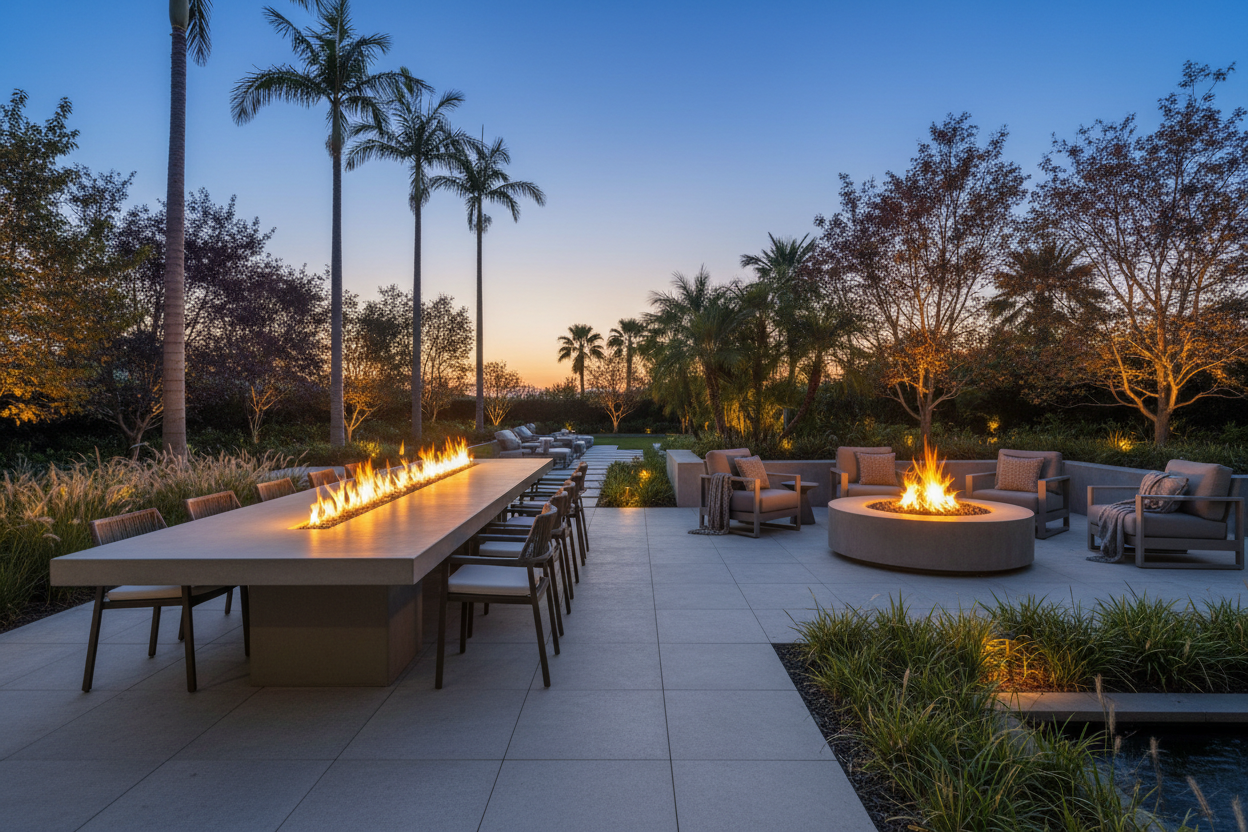
A fire table combines the warmth and ambiance of a fire feature with the practicality of an outdoor table. The flame — almost always gas — runs through a burner set into the center of the table surface, surrounded by fire glass, lava rock, or decorative media.
Best for:
- Outdoor dining or lounge areas where you want fire without sacrificing table space
- Entertaining-focused homeowners who want guests to gather around a functional surface
- Spaces where a traditional fire pit would feel too casual or too large
What to know:
Fire tables are inherently social — they put the flame at the center of conversation rather than at the center of a seating circle. They work beautifully on covered patios, in outdoor dining rooms, and in spaces where the design aesthetic leans more refined than rustic.
Like fire pits and bowls, fire tables come in a wide range of sizes and materials. Rectangular fire tables in the 60"–96" range are popular for larger entertaining spaces, while smaller square or round options suit intimate settings. GFRC tops paired with powder-coated metal bases offer the best combination of beauty, durability, and weather resistance.
Side-by-Side: Which Is Right for You?
| Fire Pit | Fire Bowl | Fire Table | |
|---|---|---|---|
| Primary purpose | Gathering & warmth | Visual impact & accent | Entertaining & function |
| Best setting | Large open spaces | Patios, pool decks, gardens | Dining & lounge areas |
| Seating arrangement | Full circle around the fire | Nearby, not around | Around the table |
| Design style | Casual to contemporary | Sculptural & dramatic | Refined & social |
| Fuel type | Gas or wood | Almost always gas | Gas |
| Size range | 24"–96"+ | 18"–48"+ | 48"–96"+ |
The Material Question
Whichever type you choose, the material your fire feature is made from will determine how it looks, how it performs, and how long it lasts. Outdoors, exposed to heat, moisture, UV, and temperature swings, not all materials are created equal.
GFRC remains the top choice for serious outdoor living installations — color runs all the way through the piece (so there's nothing to chip or fade), it's engineered for impact resistance, and it handles freeze-thaw cycles and coastal conditions with ease. It's lighter than solid concrete without sacrificing structural integrity.
Corten steel develops a beautiful, intentional rust patina and is extremely durable — ideal for a more industrial or naturalistic aesthetic.
Powder-coated steel bases offer a clean, architectural look and hold up well when properly coated, though they benefit from occasional maintenance in harsh climates.
Still Not Sure?
The best fire feature for your space depends on how you live outdoors — how you entertain, how much space you have, and what kind of atmosphere you want to create. Our team loves helping homeowners think through exactly these decisions.
Book a free consultation and let's find the right fit for your outdoor space.

Written by William Pickle

Leave a comment
This site is protected by hCaptcha and the hCaptcha Privacy Policy and Terms of Service apply.